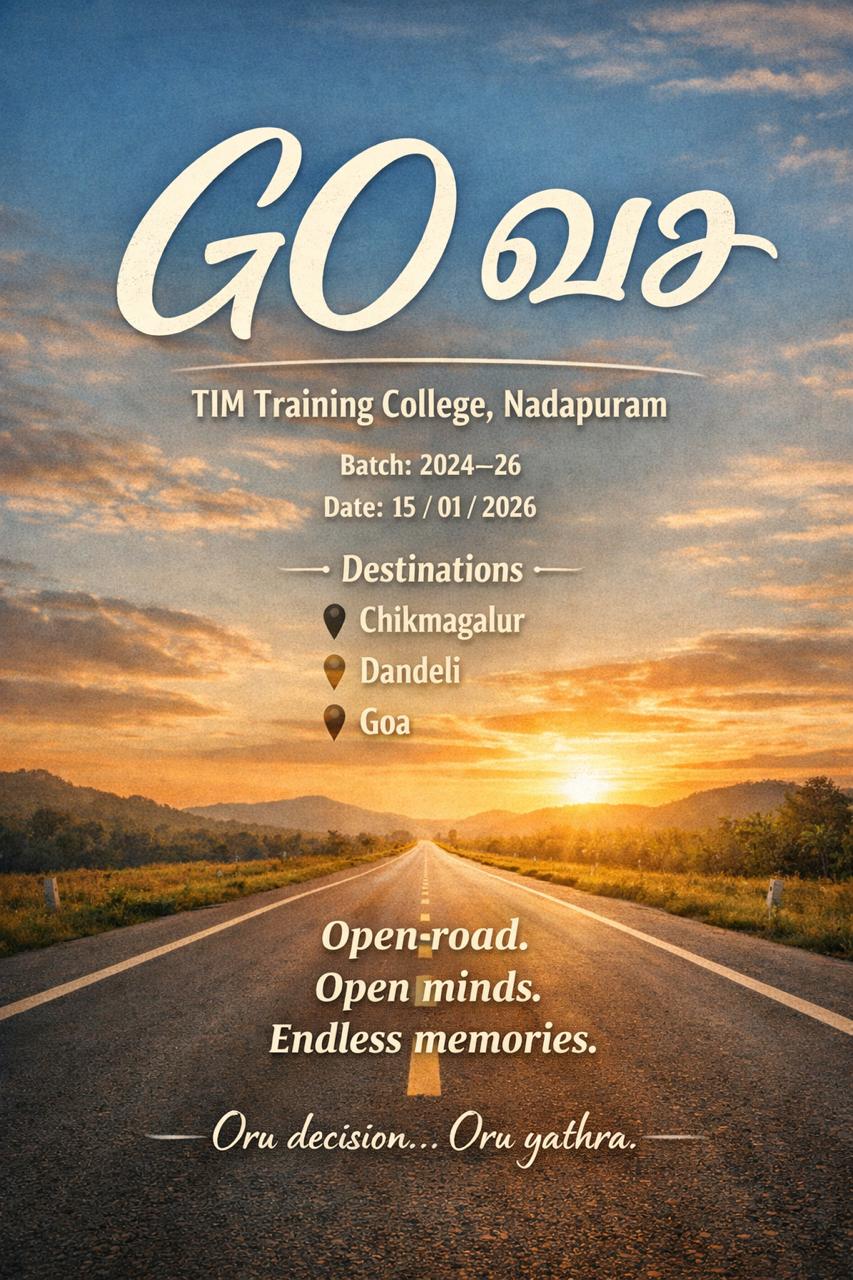
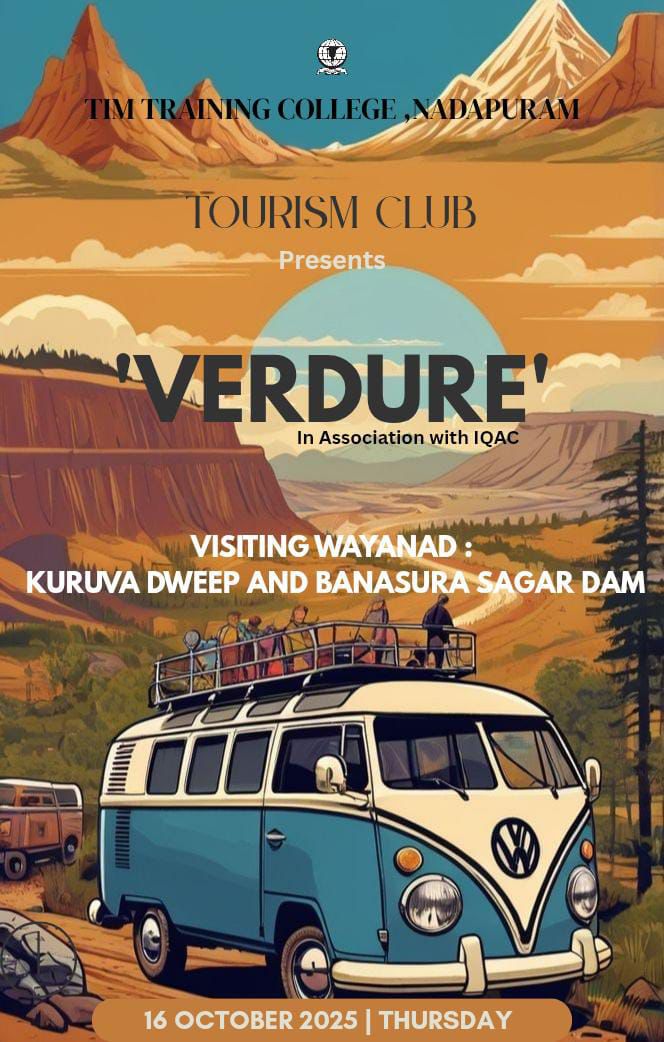
Tourism Club


TOURISM CLUB


PRESIDENT SECRETARY
RIFADH PRIYENDHU


The Tourism Club of TIM Training College aims to promote responsible, sustainable, and meaningful tourism among students.It seeks to develop a strong tourism network by connecting students with local communities, tourism organizations, and relevant stakeholders.The club provides opportunities for students to develop essential soft skills such as communication, leadership, teamwork, creativity, and problem-solving.Through heritage conservation activities, students are encouraged to understand and protect the historical and cultural significance of local heritage sites.The club actively promotes local tourism by creating awareness about the unique cultural, historical, natural, and traditional attractions of the region.Workshops, seminars, awareness programmes, and expert interactions are organized to enhance students' knowledge of tourism and its emerging opportunities.Field visits and educational tours provide students with practical exposure to tourism destinations, local traditions, and sustainable tourism practices.The club encourages students to explore entrepreneurship and innovative ideas in the tourism and hospitality sector.It also fosters a sense of environmental responsibility by encouraging the conservation of natural resources and promoting eco-friendly tourism practices.Overall, the Tourism Club strives to nurture responsible and socially conscious youth who appreciate, preserve, and contribute positively to the cultural and natural heritage of their community.


OBJECTIVES


  • 1. Promoting Responsible Tourism:
    To promote responsible, sustainable, and ethical tourism practices among students and encourage them to become responsible travellers who respect local communities, cultures, traditions, and the environment.

    2. Creating Awareness Among Youth:
    To create awareness among young people about the social, cultural, economic, and environmental significance of tourism and encourage their active participation in tourism-related initiatives.

    3. Cultural Appreciation:
    To educate students about the diverse cultures, traditions, heritage, art forms, historical landmarks, and geographical features of different regions of the country while developing an appreciation for cultural diversity and fostering an international outlook.

    4. Skill Development:
    To develop essential soft skills such as communication, leadership, teamwork, interpersonal skills, creativity, problem-solving, decision-making, and organizational abilities through tourism-related activities and programmes.

    5. Tourism Promotion:
    To promote local and regional tourism by creating awareness about significant tourist destinations, heritage sites, cultural attractions, natural resources, traditional practices, and local tourism opportunities.

    6. Heritage and Environmental Conservation:
    To encourage students to participate in activities aimed at preserving historical monuments, cultural heritage, natural resources, and environmentally sensitive tourism destinations.

    7. Experiential Learning:
    To provide students with practical exposure to tourism through field visits, educational tours, workshops, seminars, interactions with tourism professionals, and other experiential learning activities.

    8. Entrepreneurship Development:
    To encourage students to explore innovative entrepreneurial opportunities in tourism, travel, hospitality, guiding, event management, local handicrafts, and other related sectors.

    9. Career Pathways:
    To introduce students to diverse career opportunities in the tourism and hospitality industry and provide guidance regarding the skills, qualifications, and professional opportunities available in the sector.

    10. Building Tourism Networks:
    To establish meaningful connections among students, educational institutions, tourism organizations, local communities, industry professionals, and other stakeholders for collaborative tourism initiatives and knowledge sharing.